

While retirement communities are on the radar of many people as they near retirement, they must find new places to live that meet their lifestyle, social and long-term needs. In the USA, one widely selected option is the 55+ Community, a residential neighborhood created specifically for people over 55.
01
Understanding the 55+ Community
- A 55+ community is not considered a nursing home or assisted living facility. Instead, it operates like a typical community, but with age requirements in place to guarantee that at least 80 percent of homes have at least one occupant who is 55 or older. This rule from the Housing for Older Persons Act (HOPA) enables these communities to legally impose age restrictions, but to allow younger spouses or adult children (usually at least 19 or 21 years old) to be allowed to live with their parents.
02
Low-maintenance Lifestyle
- One of the major perks to living in a 55+ community is the low-maintenance lifestyle. A lot of these communities are comprised of single-story homes or condos or town houses that are designed with accessibility in mind, such as slightly wider doorways, walk-in showers and few to no steps. External upkeep, landscaping, and even certain utilities are often included in homeowners' association (HOA) fees, so you can forget about yardwork and home repairs. This can provide more free time for travel, hobbies or just unwinding in retirement.
03
A Lot of Facilities
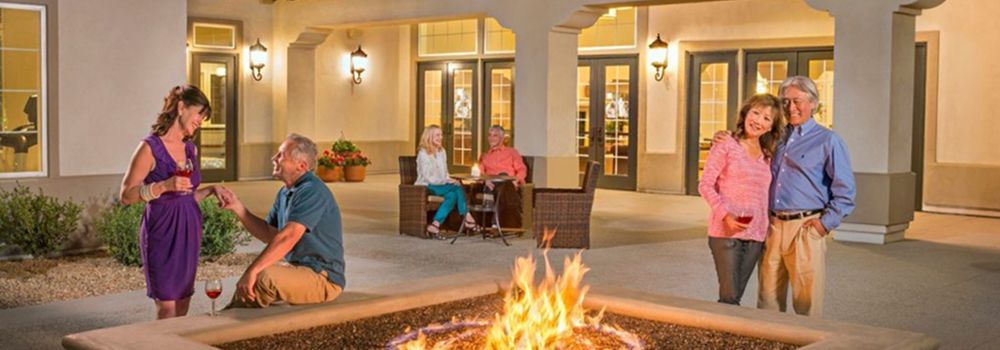
- More than just convenience, these developments focus on community and entertainment. Many 55+ communities offer the following: clubhouses, fitness centers, pools, golf courses and planned activities for book clubs, dance classes, or group outings. The idea is to create a strong sense of community, where residents make friends and remain active. For those who may have downsized from larger family homes or resettled away from earlier social networks, these built-in chances for connection can be priceless.
04
A Feeling of Security and Peaceful Living
- Yet another benefit is a feeling of security and peaceful living. And because these are age-restricted communities, they are typically not plagued by disturbances that can occur in the typical neighborhood, from loud parties to school-bus traffic. Many come complete with gated entries, or security patrols, providing a further layer of safety to residents.
05
Things You Should Notice
- The cost of 55+ communities can be quite diverse from a financial perspective. Some are luxury minded, with high-end homes and resort-style amenities, while others are more modest and budget friendly. Although buying a home in one of these neighborhoods is likely to come with HOA fees, many retirees find the bargain worth it for the services and lifestyle they receive. But these communities aren't for everybody. If you want to be a multi-generational community or have younger members staying full time with you, the age restrictions may prove restrictive. Plus, because most 55+ communities are in suburban or semi-rural locales, it may take some effort to access urban services.
Conclusion
So, you can see now that a 55+ Community does provide an attractive blend of independence, convenience, and social engagement for today's active seniors. Whether you're trying to downsize, bond with like-minded neighbors, relax and enjoy a hassle-free retirement, these neighborhoods can give structure and flexibility to the golden years.
Methods
Details
Understanding the 55+ Community
It is not considered a nursing home or assisted living facility. It operates like a typical community, but with age requirements in place to guarantee that at least 80 percent of homes have at least one occupant who is 55 or older.
Low-maintenance Lifestyle
A lot of these communities are comprised of single-story homes or condos or town houses that are designed with accessibility in mind.
A Lot of Facilities
Many 55+ communities offer the following: clubhouses, fitness centers, pools, golf courses and planned activities for book clubs, dance classes, or group outings.
A Feeling of Security and Peaceful Living
They are typically not plagued by disturbances that can occur in the typical neighborhood, from loud parties to school-bus traffic.
Things You Should Notice
The cost of 55+ communities can be quite diverse from a financial perspective. Most 55+ communities are in suburban or semi-rural locales.
Conclusion
A 55+ Community provides an attractive blend of independence, convenience, and social engagement for today's active seniors.
What Are the Specific Eligibility Criteria for Applying the $6,000 Standard Deduction?
The $6,000 deduction is intended for low- and middle-income seniors aged 65 or over. Simply having reached that "magic" number on December 31 of the previous tax year will land you a deduction of $6,000.
How to Protect the Rights of Homeless Elderly People?
Homelessness among older adults is a significant and developing emergency that requests pressing activity to protect the privileges and prosperity of this weak populace. Seniors encountering lodging frailty face special difficulties, including elevated physical and psychological well-being issues, expanded hazard of exploitation, and critical hindrances to getting to fundamental administrations. Safeguarding the rights of destitute older people requires a diverse, rights-based approach.